
🚿 Hidden Plumbing Mistakes That Cost You Later – What Most Builders Don’t Tell You
When you walk into a newly renovated bathroom or kitchen, everything looks perfect — the taps shine, the tiles are spotless, and the bath looks inviting. But what most homeowners don’t realise is this:
Some of the most important plumbing work is the part you can’t see.
At Gadla Consolidated Pty Ltd, we’ve come across many homes — even brand-new ones — where plumbing shortcuts cause big problems later. The worst part? These problems could’ve been avoided with a little more care during installation.
Let me explain…
❌ No Stop Valves = Big Trouble for Small Leaks
An angle valve under a basin – this tiny device can save you major stress
Imagine a tap suddenly breaks in the middle of the night, and the water is pouring onto your floor. You look under the basin hoping there’s a shut-off valve — but there’s nothing. The only thing you can do is rush to the main water supply and shut it off for the entire house.
This might stop the leak, but it also means your family can’t flush the toilet, use the sink, take a bath, or wash anything until a plumber arrives the next morning. What should’ve been a 15-minute fix now turns into a long, uncomfortable night — and possibly water damage.
We’ve seen this happen far too often, especially in flats or older homes. A simple R50 angle valve could’ve prevented all of that.
A stop valve (also called an angle valve or shut-off valve) lets you isolate water to just one fixture without disturbing the whole home. It’s a small fitting that makes a big difference.
🛁 No Access Hatch for the Bath – Until It Leaks...
A neat bath access panel – blends into the tile work but saves future repair costs
Some builders tile up bathtubs completely with no access hatch, trying to make things “look clean.” But that neat look becomes a nightmare when a waste pipe leaks or a mixer fails behind the wall.
We’ve had to cut open beautiful tiled baths just to reach a small fitting that could’ve been accessed easily — if a simple inspection panel had been installed. It’s not just about access either: when we break tiles, we often damage waterproofing or crack surrounding finishes.
What started as a tiny drip turns into a dusty, noisy, expensive repair job.
The result:
Broken tiles and bricks
Damaged waterproofing
A simple R300 repair turns into a R3500 job.
A basic access hatch — designed to blend in — protects your finishes while giving easy access to hidden plumbing. It’s something every bath should have, no matter how modern or traditional the design.
At Gadla Consolidated, we always install inspection hatches that match your tiles or a concealed one and keep your plumbing accessible.
🔥 Geysers: Silent Troublemakers
A correctly installed geyser with a drip tray and vacuum breakers
Most people don’t think about their geyser until there’s a cold shower or water pouring through the ceiling. But geysers can silently fail over time if they’re not installed or maintained properly.
One of the most common issues we find is the lack of a drip tray. This tray is meant to catch small leaks and drain them away safely, but if it’s missing or blocked, even a slow leak can cause ceiling boards to sag or collapse.
Other overlooked features include vacuum breakers, which prevent back-siphoning and airlocks. If these are missing or incorrectly installed, your geyser could become inefficient — or worse, unsafe.
Exposed hot water pipes also drive up your electricity bill unnecessarily, especially in winter. Insulating those pipes is a small step with long-term savings.
- No drip tray = Water damage when leaks happen
Blocked overflow pipe = Pressure builds up
No vacuum breakers = Siphoning and backflow risks
Exposed hot pipes = Wasted electricity
If your geyser hasn’t had a proper inspection lately, it’s worth checking now.
🧱 Other Common Plumbing Shortcuts
Here are some common mistakes we see:
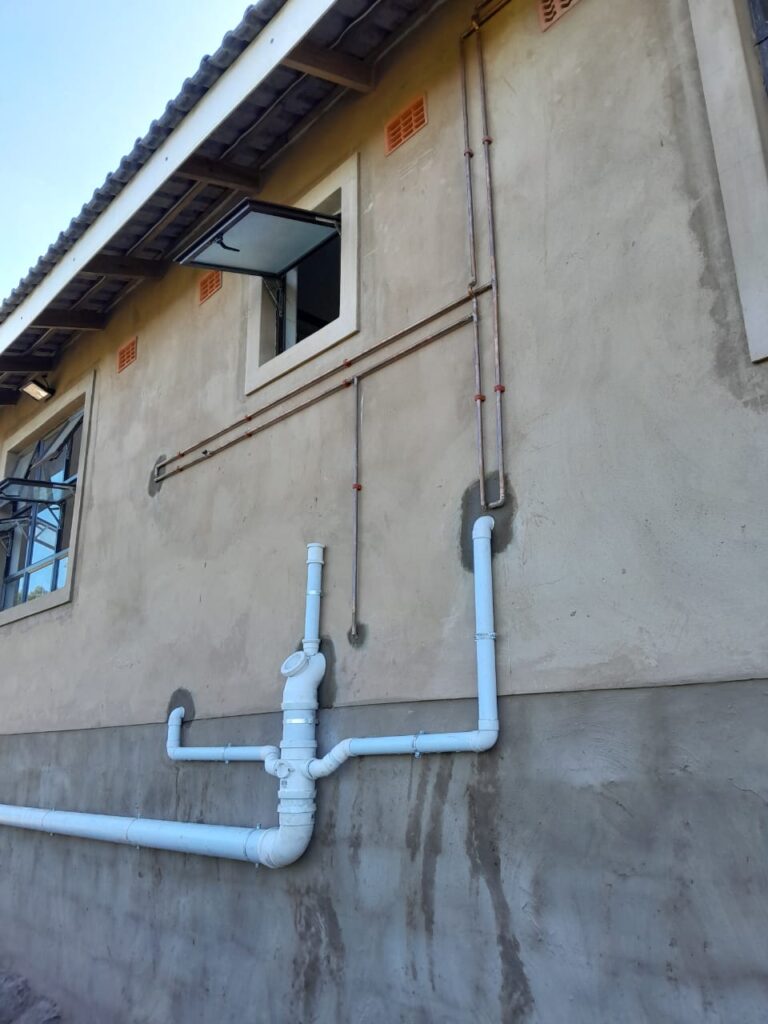
- Incorrect slope on waste pipes – Pipes that aren’t angled correctly won’t drain fully, leading to stagnant water and frequent blockages. Over time, this can cause bad smells and health risks.
- No leak testing after installation – We’ve seen builders skip proper pressure testing to save time. This leads to slow leaks inside walls that may not show until major damage is done.
- Low-pressure fittings in high-pressure systems – Cheap fittings may crack or burst when used in homes with strong municipal pressure.
- No air vents on long waste lines – Without venting, your drains may gurgle, struggle to empty, or even suck water out of nearby traps (causing odours to enter the house).
Each one seems small — until it becomes your problem.
✅ Build Smart. Fix Less.
At the end of the day, good plumbing isn’t just about fancy fittings. It’s about thinking ahead, making smart decisions, and doing things right — even behind the walls.
At Gadla Consolidated, we believe in building intelligently so our clients avoid stress and save money in the long run.
💬 Ready to renovate or want a plumbing inspection? Call us — we’ll walk you through the right way to do it.
See our Kitchen , bathroom, and more services on our home page or click here….alternatively
📲 Contact Us for a Free Quote
📞 079 458 1511
📧 info@gadlaconsolidated.co.za